If you're building out a techwear kit, you've likely run into the GORE-TEX vs Polartec debate. Both are household names in performance fabrics, but they serve very different purposes. GORE-TEX is a waterproof, breathable membrane that goes inside shells to keep rain and wind out while letting sweat escape. Polartec is a brand of synthetic fleece and insulating fabrics designed to trap warmth even when wet. Which one you need depends entirely on your activity and environment. Let's break down how each performs in actual use.
What Is GORE-TEX?
GORE-TEX isn't a fabric itself — it's a thin membrane made of expanded polytetrafluoroethylene (ePTFE) that's laminated to a face fabric and a backer. The magic is in the microstructure: billions of microscopic pores that are 20,000 times smaller than a water droplet but 700 times larger than a water vapor molecule. That means water can't penetrate, but sweat vapor can escape. The result is a durable, waterproof, and breathable barrier used in everything from Arc'teryx shells to trail-running jackets. GORE-TEX comes in several variants: Pro for maximum durability, Paclite for packability, and Active for high breathability. Each affects weight and flexibility. In the GORE-TEX vs Polartec context, the right GORE-TEX variant matters for layering. Typical GORE-TEX jackets range from $250 to $700, depending on the laminate construction (2L, 2.5L, 3L) and brand.
What Is Polartec?
Polartec, on the other hand, is a brand focused on insulation. Their fleece fabrics — like Polartec 100, 200, and the more advanced Power Stretch and Alpha — are engineered to provide warmth without weight, dry quickly, and retain insulating properties when wet. While GORE-TEX stops water, Polartec absorbs and sheds it. A Polartec fleece midlayer costs between $60 and $180, making it more accessible than most GORE-TEX shells. Polartec also has a lineup: classic 200-weight fleece for everyday warmth, Power Stretch for four-way stretch, Alpha Direct for high breathability, and Wind Pro for wind resistance. Knowing which Polartec you're comparing changes the equation. When it comes to the GORE-TEX vs Polartec decision, understanding these sub-types is crucial.
Key Differences at a Glance
To settle the GORE-TEX vs Polartec question, you have to look at their core jobs. GORE-TEX is your shield against rain and wind. Polartec is your heat-retaining layer. GORE-TEX is completely waterproof; Polartec is not waterproof at all — in fact, it absorbs moisture, though it dries fast. GORE-TEX prioritizes breathability up to a point, but it can't match the air permeability of open-knit fleeces. Polartec is highly breathable and designed to move moisture away from your body. In durability, GORE-TEX laminates can delaminate over time, while Polartec fleeces tend to pill but hold up well. GORE-TEX outer layers are heavier and less packable than a thin Polartec fleece. Price-wise, a high-end GORE-TEX shell can cost four times a basic fleece, but both materials can be found at various price points.
When to Choose GORE-TEX
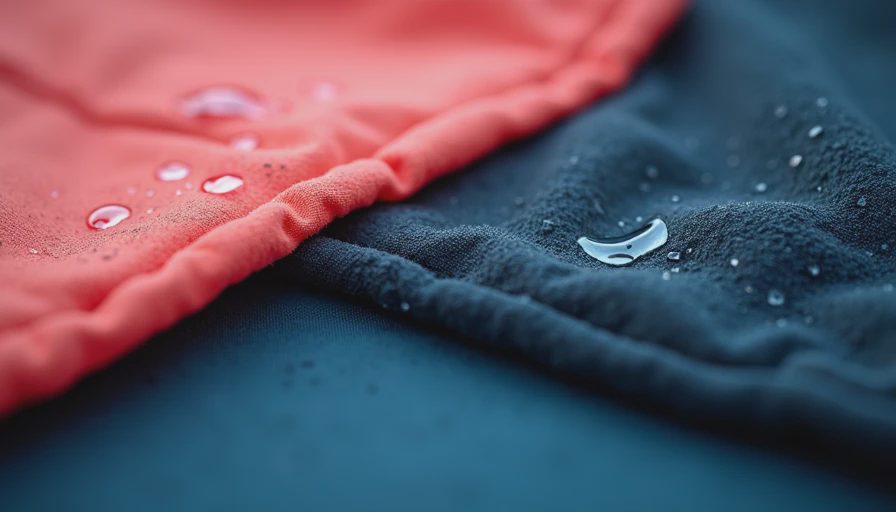
Pick GORE-TEX if you're facing sustained rain, snow, or heavy wind. It's essential for a hardshell outer layer when the weather turns nasty. For example, hiking the Olympic Peninsula in a spring rain requires a GORE-TEX Pro shell to stay dry. Similarly, for urban commuting in a downpour, a GORE-TEX jacket like the Arc'teryx Beta AR or the Patagonia Triolet keeps you dry without trapping too much heat. If you're a skier, GORE-TEX makes sense for your outer jacket to block snow and wind while managing moisture from exertion. Downside: GORE-TEX can feel clammy in high humidity, and it's rarely cheap. In the GORE-TEX vs Polartec trade-off, if weather is the main variable, GORE-TEX wins.
When to Choose Polartec
Choose Polartec when you need warmth that moves with you. For active use like trail running in cold weather, a Polartec Alpha direct jacket (like the Patagonia Nano-Air Hoody) provides insulation without overheating. For static use like camp or casual wear, a Polartec fleece (like the Mountain Hardwear Polartec 200) is cozy and breathable. Polartec also works great as a midlayer under a GORE-TEX shell — that's where the GORE-TEX vs Polartec relationship becomes complementary rather than competitive. If your climate is dry and cold, Polartec alone might be enough as an outer layer. Look for Wind Pro if you need a bit more weather resistance without a shell.
Layering GORE-TEX and Polartec Together
In many real-world kits, GORE-TEX vs Polartec isn't an either-or. They form a classic three-layer system: a base layer wicks moisture, Polartec provides insulation, and GORE-TEX shields from the elements. I've worn a Polartec Power Stretch midlayer under a GORE-TEX Pro shell for wet Pacific Northwest scrambling. The combination worked: I stayed warm without soaking myself in sweat. The key is matching the Polartec weight to the activity — high output calls for a lighter fleece (Polartec Alpha or Micro) to avoid trapping too much heat under the less breathable shell. For static use, a heavy Polartec 300 under a GORE-TEX parka is a warm winter combo. This integrated approach often outperforms either fabric alone.

Real-World Test: A Weekend in the Olympics
Last fall, I spent three days near Hurricane Ridge, alternating between rain and sleet. My kit: a Patagonia R1 Polartec Power Grid fleece under an Arc'teryx Alpha AR GORE-TEX shell. Moving uphill, the R1 breathed well enough that I didn't unzip the shell. Stopping for lunch, the GORE-TEX blocked the wind, and the Polartec kept my core warm. I also tried a standalone Polartec fleece (Mountain Hardwear Monkey Man) for a windy ridge traverse — but with steady rain, the fleece soaked through and I was cold within ten minutes. That day, GORE-TEX was non-negotiable. The lesson: understand your weather and activity before picking sides.
Price and Value: GORE-TEX vs Polartec
A solid GORE-TEX shell costs $300 to $700, while a premium Polartec fleece runs $80 to $200. For budget-minded beginners, starting with a quality fleece makes sense — you get a lot of utility for the dollar. But if you live in a rainy area, a GORE-TEX shell is the better long-term investment. Many techwear enthusiasts end up owning both, layering them together. In the GORE-TEX vs Polartec value argument, Polartec offers cheaper baseline warmth, but GORE-TEX provides irreplaceable waterproofing.
Which One Should You Buy?
If your priority is staying dry in wet weather, GORE-TEX wins every time. If your priority is lightweight warmth and breathability, Polartec is the smarter choice. Most techwear enthusiasts end up owning both. For a starter kit, I'd suggest a solid GORE-TEX shell ($300–500) and a versatile Polartec fleece ($80–150). That combination handles the vast majority of conditions without breaking the bank. Remember: the GORE-TEX vs Polartec debate is really about matching the tool to the task. Function first.
No comments yet.