
If you spend your day moving between a subway seat, a desk, and a rainy sidewalk, you already know why **urban techwear** matters. It’s not about looking like a cyberpunk extra—it’s about clothes that solve real problems: staying dry without overheating, carrying your gear without a backpack bulge, and looking put-together without trying too hard. Whether you’re new to the scene or looking to refine your stack, this guide breaks down what actually works for everyday city life.
What Is Urban Techwear?
At its core, urban techwear is clothing designed for the specific demands of city living—commuting, unpredictable weather, and constant movement. Think water-resistant shells, stretchy woven pants with smart pocket layouts, and bags that distribute weight evenly. It borrows heavily from outdoor gear but tailors it for asphalt instead of alpine trails. The best pieces solve a problem: “How do I keep my phone dry while walking in the rain?” or “Why do my pants have a hidden zip pocket for my metro card?” Function comes first, but silhouette still matters—a good piece looks sharp even when it’s not raining.
Key Fabrics and Technologies You Should Know
Understanding materials helps you spot quality and avoid overpriced gimmicks. Look for

**Gore-Tex** is the gold standard for waterproof-breathable shells; it keeps rain out while letting sweat escape. **DWR (Durable Water Repellent)** coatings are common on lighter fabrics—they bead water but need reapplication over time. **Scholler** and **Schoeller** fabrics (yes, two different companies) offer stretch, abrasion resistance, and sometimes cold-black treatment. **CORDURA** nylon adds toughness where it matters, like backpack bases or pants knees. For insulation, **Primaloft** and **Coreloft** mimic down while staying warm when wet. When you see these names on a tag, you’re getting real performance.
Layering Systems for City Life
The three-layer system works just as well downtown as it does on a trail. Start with a **base layer** (merino wool or synthetic) that wicks moisture away—no one wants a sweaty back on the train. Add a **mid layer** for warmth: a lightweight fleece or synthetic jacket that breathes. Top it with a **shell** that blocks wind and rain. The key is modularity: unzip the shell when you go indoors, ditch the mid layer when the sun comes out. A good layering setup lets you adapt without stripping down mid-block. Popular combos include a Patagonia Capilene tee, an Arc’teryx Atom LT hoody, and a Veilance Mionn Shell.
Top Brands to Consider (And Why)
**Acronym** sets the bar for advanced patterning and pocket systems—expect high prices and a steep learning curve. **Veilance** (Arc’teryx’s urban line) offers minimalist designs with technical construction: rain jackets that look like business wear. **Arc’teryx** LEAF is military-grade gear adapted for city use, but it’s heavy on tactical vibes. **Nike ACG** brings trail-inspired pieces at more accessible prices. **Uniqlo** has surprisingly good blocktech coats for under $100—they’re a solid starting point. **Mission Workshop** and **Chrome Industries** focus on cycling-friendly gear with urban style. Don’t overlook **Carhartt WIP** for durable canvas jackets that blend into techwear with some modding.
Budget Entry Points Without Sacrificing Function
You don’t need to drop $800 on a jacket to get real performance. Start with a **Uniqlo Blocktech Parka** ($80) for rain protection—it’s not breathable like Gore-Tex, but it works for short commutes. Add **Nike ACG Sherpa Fleece** ($110) for warmth and a casual look. For pants, **Dickies 874** ($55) are tough and can be tapered or hemmed, or try **Prana Stretch Zion** ($65) for water-resistant hiking pants that pass as chinos. A **Topo Designs Accessory Bag** ($30) can organize your pockets without adding bulk. The key is to buy pieces that perform, then upgrade one at a time. No one needs a full Acronym kit on day one.
Building Your First Urban Techwear Outfit
Start with a mission: “I walk 20 minutes to work and need to carry a laptop, lunch, and gym clothes.” Your shell should be waterproof and packable—look for a jacket that stuffs into its own pocket. Your pants ought to have a gusseted crotch (room to move) and at least one secure zippered pocket for your phone and wallet. Your shoes should be grippy enough for wet pavement—think a trail running sneaker like the **Salomon Speedcross** or the **Nike Pegasus Trail**. For your bag, a 20L roll-top like the **Arc’teryx Granville** or **Mystery Ranch Urban Assault** keeps gear dry
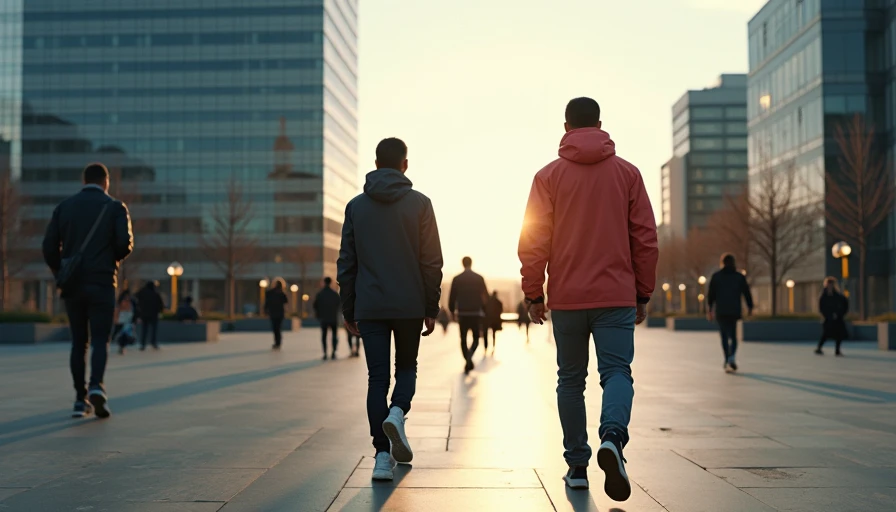
and organized tops. Layering a merino tee under a technical fleece and shell means you can handle anything the city throws at you.
Maintenance: Make Your Gear Last
Techwear fabrics need care to keep performing. Wash your shells with a dedicated cleaner (like Nikwax Tech Wash) to remove dirt without stripping DWR. Then apply a spray-on DWR treatment every few months, especially before rain season. Avoid fabric softeners—they clog pores in breathable membranes. Store your jackets on wide hangers to keep the shape. For bags, wipe down zippers and check for loose stitching. A little maintenance keeps your $300 jacket working like new for years.
Final Thoughts
Urban techwear isn’t a uniform—it’s a system. Start with the pieces that solve your biggest daily pain point (rain, overheating, pocket overload) and build from there. Function first, silhouette second, but both still matter. You don’t have to spend a fortune to get started, and the community on Hardwear Forum is here to help you make smart choices. How did your current setup perform in today’s commute? Drop your experience in the comments.
No comments yet.